|
|
| |
|
Etiquette is the code that governs the expectations of social behavior, the conventional norm. It is an unwritten code, which evolves from written rules... |
 | 
|
|
|
|
|
| |
|
Formal wear or formal dress is a general fashion term used to describe clothing suitable for formal events, including weddings, debutante cotillions, balls, etc... |
 |
|
|
|
|
|
| |
| The act or practice of being hospitable, that is, the reception and entertainment of guests, visitors, or strangers, with liberality and goodwill... |
 |
|
|
|
|
|
| |
|
Sociolinguistics is the study of the effect of any and all aspects of society, including cultural norms, expectations, and context, on the way language is used... |
 |
|
|
|
|
|
| |
| An honorific is a term used to convey esteem or respect. "Honorific" may refer broadly to the style of language or particular words used, or, as in this article, to specific words used to convey honor... |
 |
|
|
|
|
|
| |
| Etiquette is dependent on culture; what is excellent etiquette in one society may shock in another. Etiquette evolves within culture... |
 |
|
|
|
|
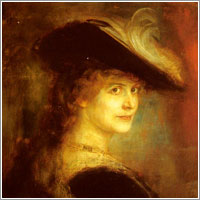 Lady: Lady: A lady is a woman who is the counterpart of a lord; or, the counterpart of a gentleman. The term Lady can be used as a title. Etymology and usage
The word comes from Old English hlaifdige; the first part of the word is laif, loaf, bread, as in the corresponding hlaford, lord; the second part is usually taken to be from the root dig-, to knead, seen also in dough; the sense development from bread-kneader, bread-maker, to the ordinary meaning, though not clearly to be traced historically, may be illustrated by that of lord. The primary meaning of "mistress of a household" is now mostly obsolete, save for the occasional use of old-fashioned phrases such as "lady of the house." This meaning is retained, however, in the title First Lady, used for the wife of an elected president or prime minister. Today's Tiip: When it comes to simple problems to ink replacement, you need a good printer. The printer cartrige is also a very important part to your injet printer since the costs associated with ink cartridges can well exceed the total cost of the printer. The special use of the word as a title of the Virgin Mary, usually Our Lady, represents the Latin Domina Nostra. In Lady Day and Lady Chapel the word is properly a genitive, representing the hlaefdigan.
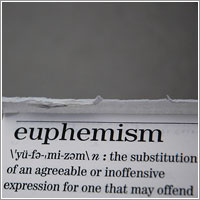 Euphemism: Euphemism: A euphemism is an expression intended by the speaker to be less offensive, disturbing, or troubling to the listener than the word or phrase it replaces, or in the case of doublespeak to make it less troublesome for the speaker. When a phrase is used as a euphemism, it often becomes a metaphor whose literal meaning is dropped. Euphemisms are often used to hide unpleasant or disturbing ideas, even when the literal term for them is not necessarily offensive. This type of euphemism is used in public relations and politics, where it is sometimes disparagingly called doublespeak. There are also superstitious euphemisms, based (consciously or unconsciously) on the idea that words have the power to bring bad fortune (for example, not speaking the word "cancer"; see Etymology and Common examples below) and religious euphemisms, based on the idea that some words are sacred, or that some words are spiritually imperiling (taboo; see Etymology and Religious euphemisms below).
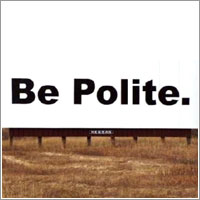 Politeness: Politeness Politeness: Politeness is best expressed as the practical application of good manners or etiquette. It is a culturally defined phenomenon, and what is considered polite in one culture can often be quite rude or simply strange in another. While the goal of politeness is to make all of the parties relaxed and comfortable with one another, these culturally defined standards at times may be manipulated to inflict shame on a designated party. Sociolinguists Brown and Levinson identified two kinds of politeness, deriving from Erving Goffman's concept of face:
- Negative politeness: Making a request less infringing, such as "If you don't mind..." or "If it isn't too much trouble..."; respects a person's right to act freely. In other words, deference. There is a greater use of indirect speech acts.
- Positive politeness: Seeks to establish a positive relationship between parties; respects a person's need to be liked and understood. Direct speech acts, swearing and flouting Grice's maxims can be considered aspects of positive politeness because:
- they show an awareness that the relationship is strong enough to cope with what would normally be considered impolite (in the popular understanding of the term);
- they articulate an awareness of the other person's values, which fulfils the person's desire to be accepted.
Some cultures seem to prefer one of these kinds of politeness over the other.
Example
When invited to a birthday party or wedding, guests are expected to bring a gift. Common gifts include flowers, chocolates, alcohol, perfumes, gift certificates or "an envelope" - undisclosed amount of cash in a sealed envelope. Often, wedding invitations have symbols on them indicating what kind(s) of gifts the couple would like to receive.
Manners
In sociology, manners are the unenforced standards of conduct which show the actor to be cultured, polite, and refined. They are like laws in that they codify or set a standard for human behavior, but they are unlike laws in that there is no formal system for punishing transgressions. They are a kind of norm.
What is considered "mannerly" is highly susceptible to change with time, geographical location, social stratum, occasion, and other factors. That manners matter is evinced by the fact that large books have been written on the subject, advice columns frequently deal with questions of mannerly behavior, and that schools have existed for the sole purpose of teaching manners.
A lady is a term frequently used for a woman who follows proper manners; the term gentleman is used as a male counterpart.
The body of behaviors we call "manners" are evolution's solution to easing the stresses of communal living. In essence, mannerly behavior recognizes the right of another to share the communal space. Many of our daily expressions of politeness reflect this function. Saying "excuse me," for example, shows that you recognize that you have invaded another's space, and regret the necessity of doing so. It is a basic tenet in law that it is wrongful to cause damages to another (see norm). Since there cannot be a law for every slight, daily causing of damage to another, manners serve to at least acknowledge, if not make recompense, for the damage.
Miss Manners (see Further Reading below) regrets that in recent times the idea that one should be "assertive" has gained currency, holding that being assertive is simply another name for "the Impulse Rude," which is to be resisted at all times. She prefers "the withering look, the insistent and repeated request, the cold voice, the report up the chain of command, and the tilted nose." She also rejects the idea that manners is all about making people comfortable, "as if etiquette weren't magnificently capable of being used to make others feel uncomfortable," all in the name of preserving peace in the public arena.
Further reading
-
Miss Manners' Guide to Excruciatingly Correct Behavior, by Judith Martin, W. W. Norton & Company; Updated edition (April 25, 2005) ISBN 0393058743, 864 pages -
Emily Post's Etiquette, by Peggy Post, HarperResource; 17th Indxd edition (November 1, 2004),ISBN 0066209579, 896 pages
Similar concepts
There are many terms for societal norms that imply various connotations. Compare and contrast manners with etiquette, politeness, dharma, social role, social class, taboo, ethics, and morality. References
Categories: Articles to be expanded | Society | Human behavior | Etiquette |
|
manners
MISS MANNERS: JUDITH MARTIN: Time is relative -- unless its yours Contra Costa Times - Jun 30 3:01 AM DEAR MISS MANNERS: I have noticed a lessened interest in consideration for people and their time. It seems to be a new trend. I am talking about arranging a special meal for friends or a work get-together. For example, a longtime friend traveled here for a business trip, and I asked him for dinner with a few friends. He told me he was waiting on another friend to confirm a night before he could
clipart
Jupitermedia's JupiterWeb Division Launches ClickLink Advertising Program FinanzNachrichten - Jun 29 5:49 AM Jupitermedia Corporation's (Nasdaq: JUPM) JupiterWeb online publishing division introduced ClickLink(sm) (www.jupiterweb.com/clicklink/), a cost-per-click advertising program that delivers the contextual targeting and simplicity of buying keywords.
clips
Google Video to Let Users Rate Clips TV Week - Jun 29 11:38 AM Google Inc., which runs the third-most watched video-sharing Web site, is adding features that allow users to share opinions and comments about the clips it features.
Cloud Strife
Parting shot taken Herald Journal - Jun 29 5:20 AM In his last week as superintendent of Logan School District, Richard Jensen called for district changes to be made, saying he’s leaving “under a dark cloud†but with a clear conscience and allowing history to be his judge.
coco
Coco's grab ensures 12th straight MLB.com - Jun 29 7:30 PM Coco's grab ensures 12th straight
code lyoko
Free celeb nude videos celebs in hot pants. El Cronista Regional - Jun 21 2:41 AM Celebrity mugshots while free hentai code lyoko while free celebrity sex mpeg galleries. Sexy celeb and french movies - lesbians, lesbian celebrities having sex. Free celebrity sex movies look at hard pregnant sex look at celeb + hardcore.
coeds
The dally of the 'Dolls' The Oregonian - Jun 30 12:31 AM Has globalization destroyed the myth of True Love? The movie follows a bunch of gorgeous twentysomethings as they commute endlessly around Europe, tending little bonfires of lust and angst.
coheed and cambria
Tower Records launches music service with 192kbps audio Addict 3D - Jun 27 11:44 PM For over 45 years, Tower has strived to offer its customers the best selection of music available in every format imaginable.
|
| MISS MANNERS: JUDITH MARTIN: Time is relative -- unless its yours Contra Costa Times - Jun 30 3:01 AM DEAR MISS MANNERS: I have noticed a lessened interest in consideration for people and their time. It seems to be a new trend. I am talking about arranging a special meal for friends or a work get-together. For example, a longtime friend traveled here for a business trip, and I asked him for dinner with a few friends. He told me he was waiting on another friend to confirm a night before he could
Learning to mind manners Carroll County Online - Jun 30 1:22 AM My cousin Jeff and his children, ages 11 and 6, come to my grandmother's house every Sunday along with many of my other relatives. Without fail, Jeff's kids walk past my grandmother without even so much as a "hello." They immediately go straight to the kitchen and start rummaging.
Where have all our manners gone? Rapid City Journal - Jun 29 10:49 PM Maybe it’s the guy at the intersection who apparently doesn’t know that his car came with a turn signal. Perhaps it’s the cell phone user who plans her wedding in the check-out line, while 20 tired customers wait behind her.
Letter from China: Minding their manners, looking to the Olympics International Herald Tribune - Jun 28 9:31 AM In the minds of China's leaders, hosting the 2008 Olympic Games is an opportunity to wow the world with China's fantastic story of growth.
`Mrs. Palfrey' sure to delight Akron Beacon Journal - Jun 30 12:27 AM You may think there is no hotel in London like the Claremont, where Mrs. Palfrey becomes a lodger. No hotel where respectable gentlefolk can live by the month and have their breakfasts and dinners served to them in a dining room where good manners prevail.
Roddick minds manners, avoids first-round upset The State Journal-Register - Jun 29 5:06 AM WIMBLEDON, England - All the ingredients were in place for Andy Roddick to throw a tantrum Wednesday at Wimbledon.
LOCAL WRITER LANDS MAJOR PRIZE Las Vegas CityLife - Jun 29 2:47 PM Las Vegas is known for literature like New York is known for manners, but that may change with the help of one local author.
7 Days of readings Gay City News - Jun 29 2:41 PM ALTERNATIVES TO SEX “Is it more embarrassing to admit your flaws and questionable behavior, or to deny them when it’s obvious that what you are writing has autobiographical elements?†wonders Stephen McCauley, author of the gay comedy of manners, “Alternatives to Sex.†McCauley’s fifth novel concerns William, a Boston based realtor who shares the author’s obsession for cleaning products like
This college course is for the dogs The Trenton Times - Jun 29 1:23 AM I've just spent a week with my niece, Nathalie, and discovered that she is crazy about dogs. So crazy that she goes to college with one. While her teachers are filling her head with formulas and facts for her future career, she's filling Jester's head with "good manners" for his future career.
Born with a silver-screen spoon... Boston Herald - Jun 28 9:19 PM BEN AFFLECK and Jennifer Garner are already instilling Martha Stewart manners in their 7-month-old daughter, Violet, reports "The Insider" guy Marc Malkin. Matt...
|
|
|